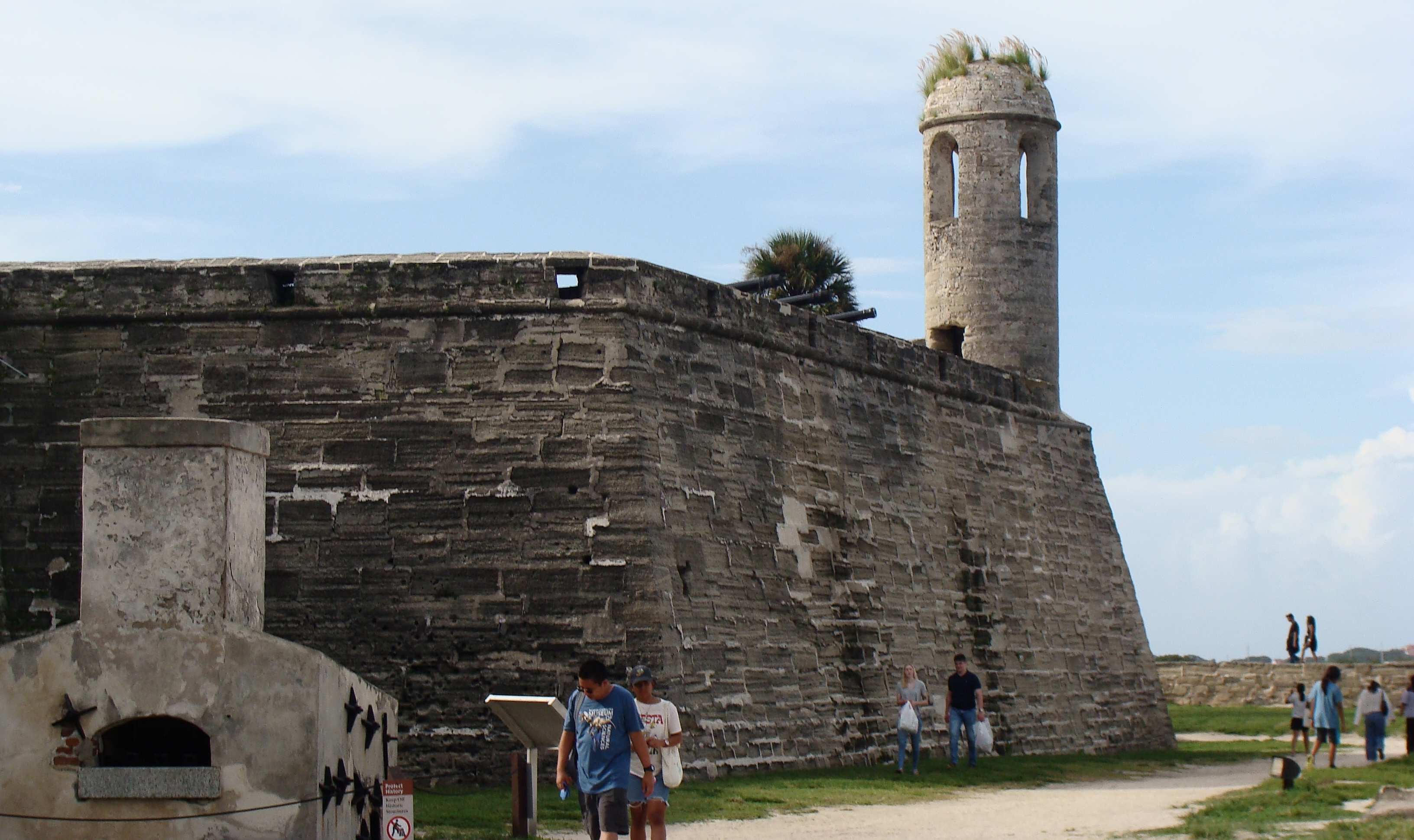
What's the oldest city in the United States? Contrary to common belief, it isn't Wildwood, NJ, nor is it St. Augustine, FL. That claim belongs to Taos Pueblo, founded around 1000 AD. St. Augustine, named after Augustine of Hippo, is the oldest European-founded city in the contiguous US (San Juan, Puerto Rico, is 44 years older). The land was initially claimed for the Spanish by Juan Ponce de León in 1513, then claimed by the French in 1564, reclaimed by the Spanish by Pedro Menéndez de Avilés in 1565, had a brief stint as a British colony from 1763 until the 1783 Peace of Paris, where it returned to the Spanish, then finally acquired by the US with the Adams–Onís Treaty in 1821. Fast forward to the 1880s, Henry Flagler, cofounder of petroleum behemoth Standard Oil, began investing a ton of money into the east coast of Florida, including St. Augustine. These investments bolstered the city’s tourism industry, which is its economy’s driving force to this day. So, we have the Spanish and Henry Flagler to thank for the St. Augustine we have today. Despite being from New York, Flagler’s resting place is in St. Augustine at the Flagler Memorial Presbyterian Church.
BUC-EE'S BREAK
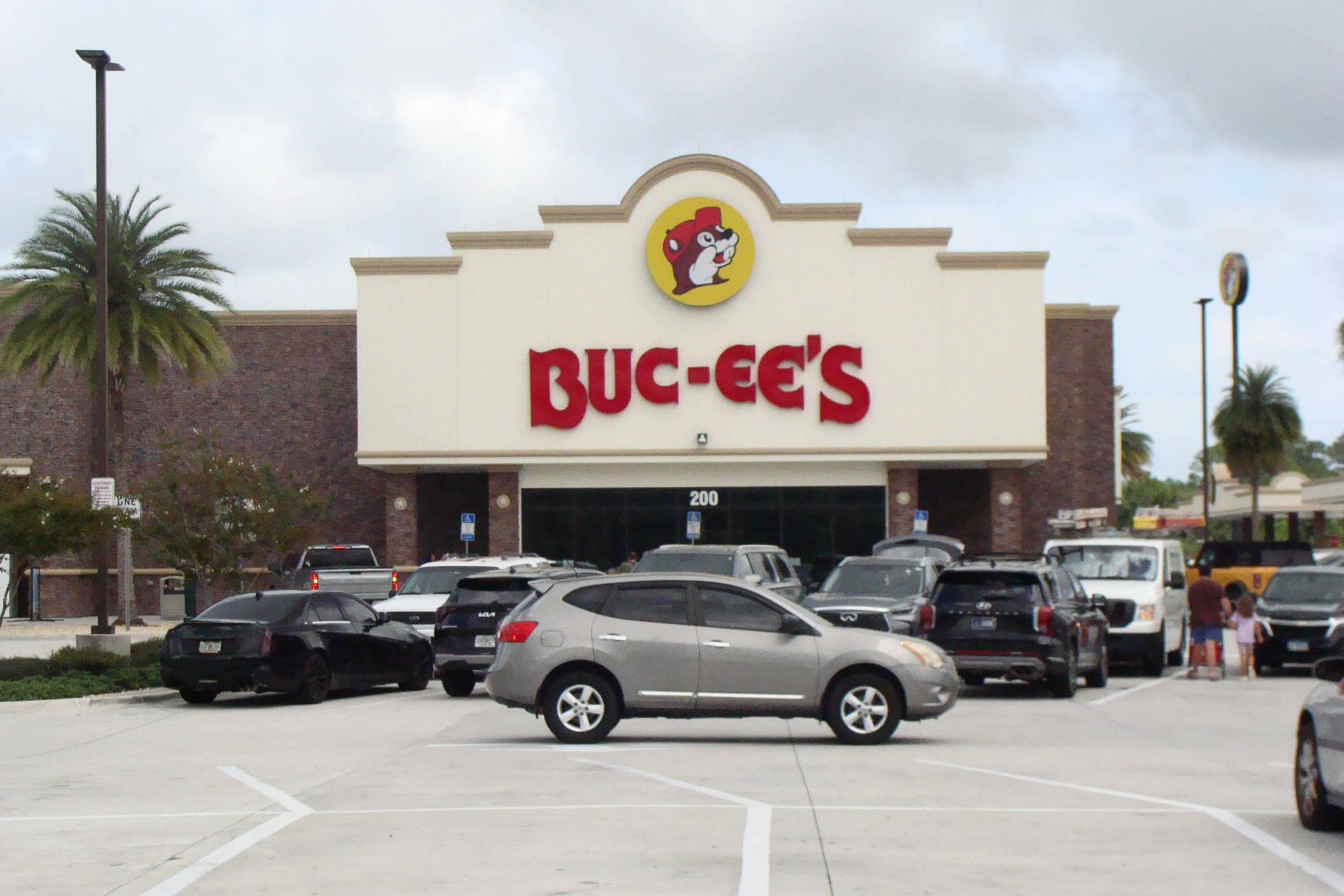
Buc-ee's in World Golf Village, FL on August 7, 2026
Enough of that boring history stuff; we’re going to Buc-ee’s! For those unfamiliar, Buc-ee’s is a convenience store known for being bigger than any other convenience store on Earth. The first Buc-ee’s location was founded in 1982 by Arch "Beaver" Aplin in Clute, Texas, and has now expanded to 56 locations primarily in the South. It is a wacky place. There is an infinite selection of name-brand snacks, but also food made in-house, everything from key lime pie pudding to brisket burritos.
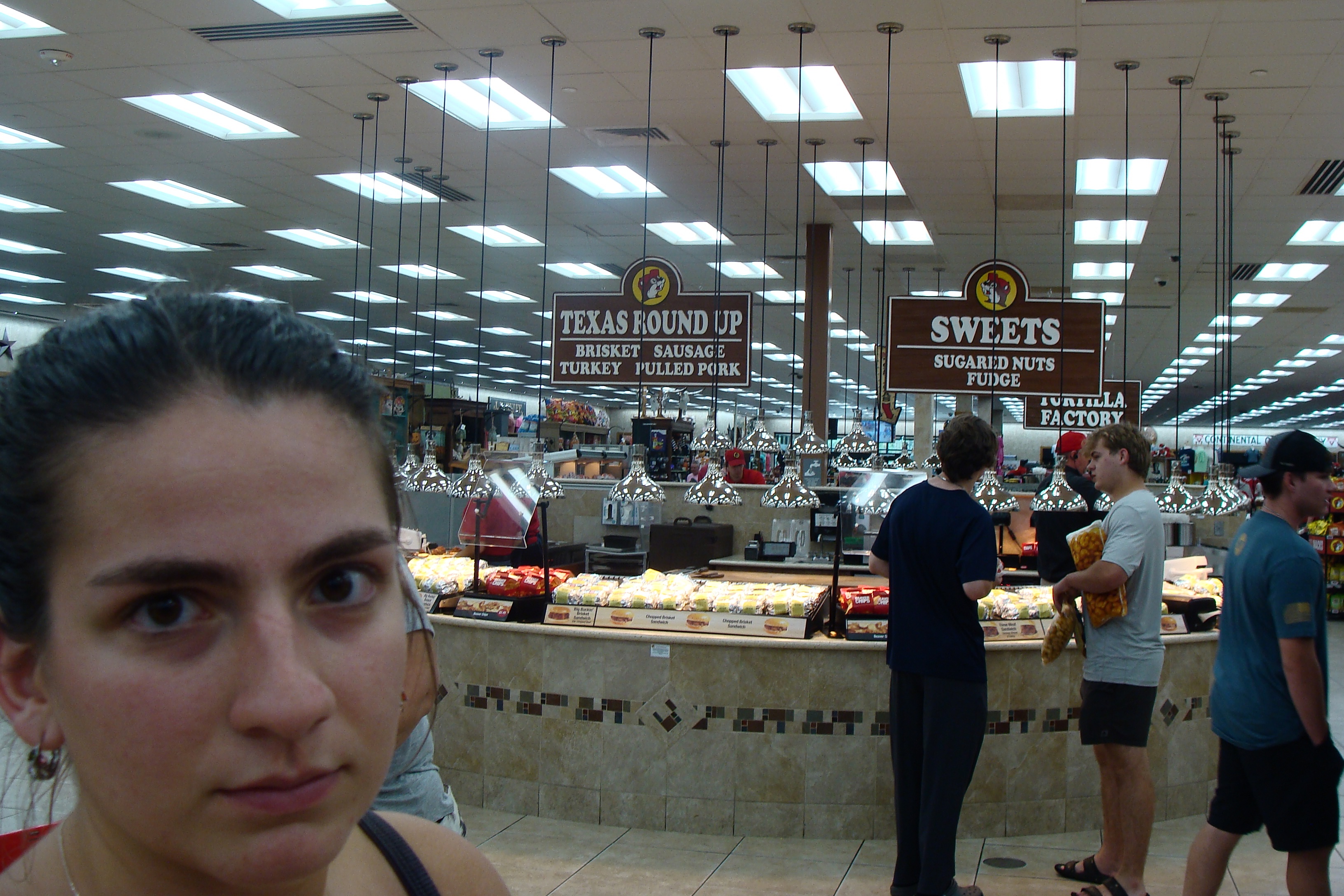
Simela infront of the Texas Round Up in Buc-ee's on August 7, 2026
One of their food stations is open air, and all the employees yell in unison while preparing the food. However strange that may be, the discipline shows in the taste; the food is pretty good. The bathrooms are massive and apparently have attendants, but I did not have the pleasure of being attended to during my visit. And don’t forget to say hi to Buc-ee himself; each location has an employee dress up as the lovable beaver. Recently, though, the mascot has been the topic of controversial lawsuits Buc-ee's has issued against small businesses that also use beaver-adjacent logos. Whatever you make of that, Buc-ee’s is wildly popular and just getting more so.
BREAK OVER
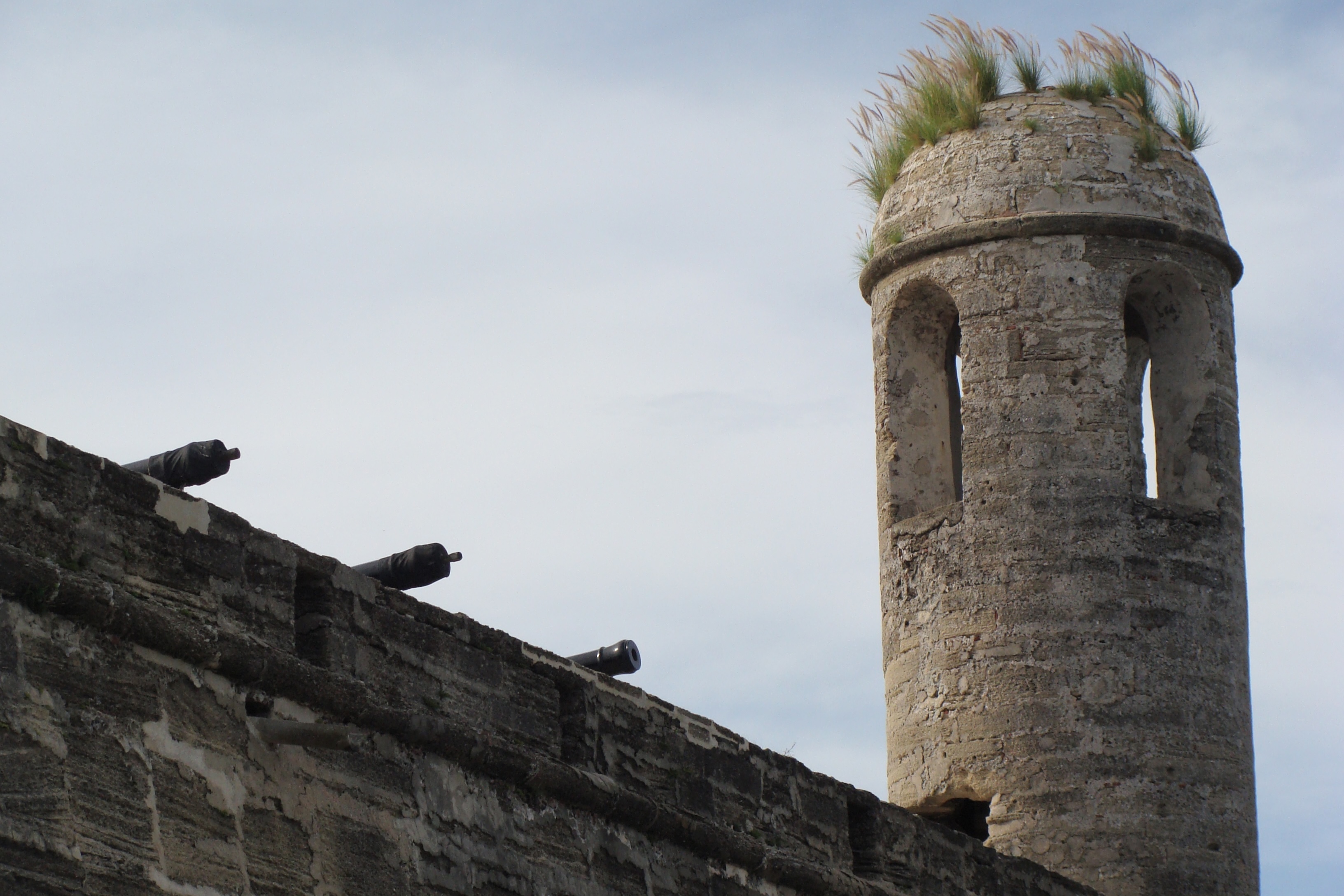
Canons on the east side of Castillo de San Marcos on August 7, 2026
Back to history stuff, in the heart of downtown is the primary attraction Castillo de San Marcos, a Spanish fort constructed from 1672 to 1695. It’s the oldest masonry fort in the contiguous United States (whatever that means). It was for a time named Fort St. Mark during the British rule and in 1821 became a US army base named Fort Marion until it was handed over to the National Park Service. In 1942, Congress restored the original Spanish name of the fort.
A short walk over to St. George Street, and you’ll find plenty of shops, restaurants, and live events. Most of the downtown area is catered towards tourists, of course, but it’s still an interesting place to explore. Schmagel’s Bagels is a great stop if you want to hear the Curb Your Enthusiasm theme song while you eat an awesome breakfast. Second Read Books is a small but interesting bookstore, with lots of neat used books, and a lovely lady manning the register. And Market to Market pottery has a collection of beautiful imported handmade Talavera pottery. There's also the St. Photios Greek Orthodox Shrine, dedicated to Greek immigrants who arrived in America in 1768, it is very serene and smells exactly how you would imagine a Greek Orthodox shrine would.
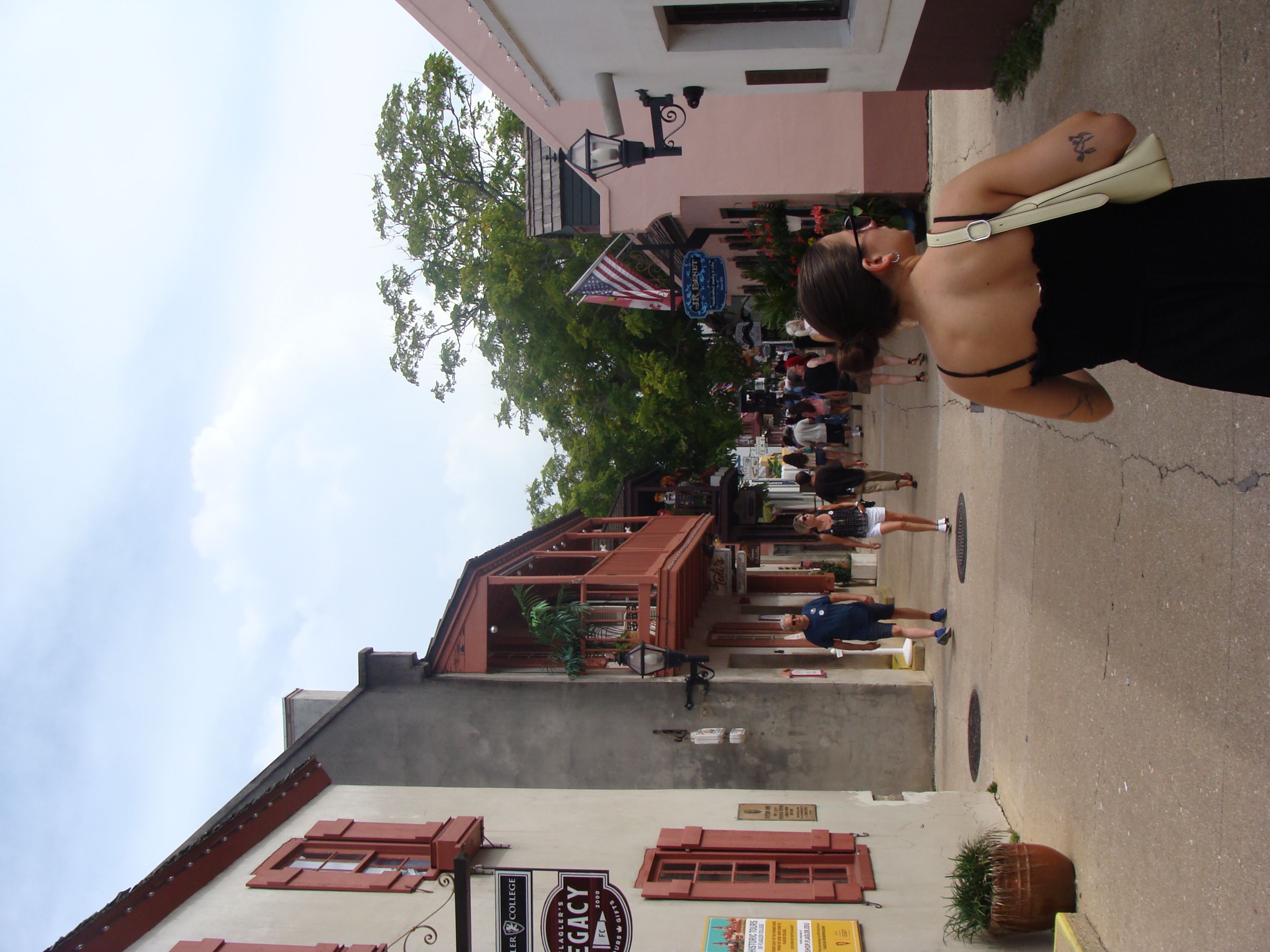
St. George Street in St. Augustine, FL on August, 7 2026
The most interesting place, though, is the eclectic collection of Otto Lightner turned museum. Born in Norwich, Kansas, Lightner earned his keep through publishing magazines, most notably Hobbies—The Magazine for Collectors. After a visit to Hotel Ponce de León in 1946, Lightner decided to purchase a different St. Augustine hotel, the Hotel Alcazar, which had been closed since 1931. In 1948 the Lightner Museum for Hobbies opened to the public, later shortened to the Lightner Museum. There are typical displays in this museum of furniture, sculptures, photographs, and paintings. Woman in Yellow by Alfred Stevens is an example of some of the work on exhibit.
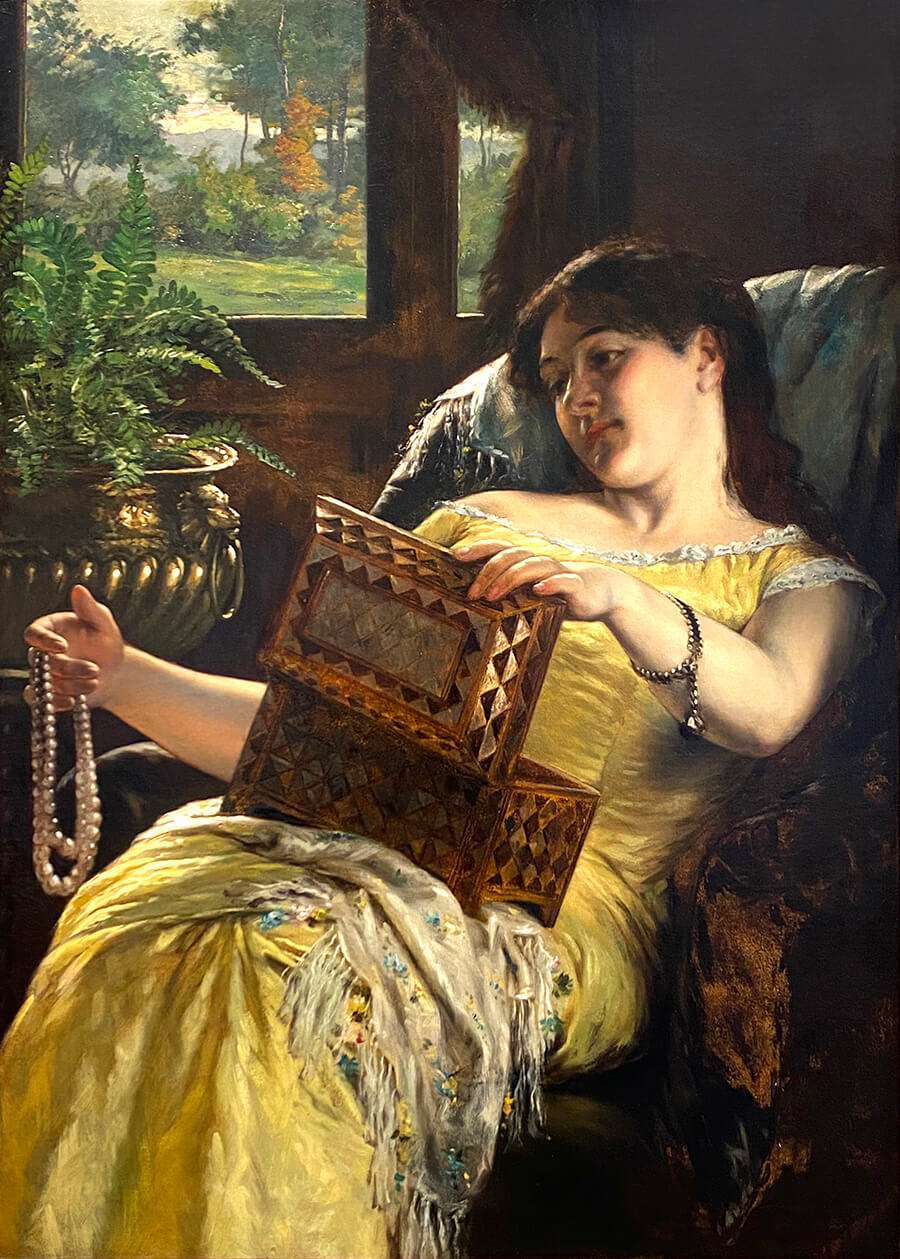
Alfred Stevens, Woman in Yellow, c. 1866. Oil on canvas
But that’s not really what gives the Lightner’s collection its reputation. There is some peculiar stuff in there. A quick list: Winston Churchill’s Lion Rota, a shrunken head, a mummified Egyptian child, a wedding chest, and an exhibit of penny-farthings. There are plenty of other strange objects inside, and I would recommend stopping by if you’re in St. Augustine and have the time and money. The admission is steep, $20 for a standard adult ticket, but it’s worth it to support the museum and to see the fascinating collection.

Simela at the Lightner Museum on August 8, 2026
St. Augustine is a wonderful place, and there’s even more to see than what I mentioned here, so I encourage you to explore it for yourself.
Comments
Loading comments...